Learn how expert-led formulation, digestibility, and nutrient adequacy shape trustworthy dog food – and how to evaluate what’s actually behind the label.
Science-based dog food is nutrition formulated using veterinary expertise, peer-reviewed research, and feeding trials — not just marketing claims.
At its core, this means recipes are designed with purpose, tested for real outcomes, and built to support a dog’s optimum health at every life stage. Unlike formulas built mainly for flavor or shelf appeal, science-based foods are grounded in evidence and guided by regulatory, nutritional, and veterinary standards such as those set by AAFCO, NRC, and WSAVA.
Let’s unpack what goes into a truly science-backed formula, and how to tell if your dog’s food is actually living up to the label.
In this article
What is ‘science-based’ dog food?
Science-based dog food is nutrition designed through veterinary research, rigorous testing, and advanced nutrient standards – not just marketing claims. These formulas are built to match a dog’s life stage, lifestyle, and health status using evidence-based methods recognized by authorities such as AAFCO, NRC, and WSAVA.
True science-backed nutrition:
- Begins with canine biology – formulations account for how dogs actually process and use nutrients.
- Applies scientific methods – every ingredient serves a specific, proven health purpose.
- Is a continual process – research, feeding trials, and recipe improvements ensure ongoing relevance and efficacy.
A genuinely science-based brand is one that continually incorporates new veterinary findings to improve both recipes and health outcomes.
Who defines science in dog nutrition?
Dog nutrition science is shaped by regulatory, scientific, and veterinary authorities that set nutrient standards, publish research-based guidelines, and ensure safety and transparency.
- Association of American Feed Control Officials (AAFCO): AAFCO sets the standards for pet food commercialization, such as nutrient requirements and ingredient definitions, for all commercial pet foods, treats, supplements, and toppers in the U.S. While AAFCO itself doesn’t regulate, most states adopt its standards. Any product labeled “complete and balanced” must meet AAFCO nutrient profiles through either nutrient testing or feeding trials. Think of AAFCO as the foundation that creates the standards all commercial foods must follow, ensuring nutritional adequacy and food safety so pets receive the essential nutrients required for optimal health.
- National Research Council (NRC): The NRC is a branch of the National Academies of Sciences, Engineering, and Medicine. It is composed of experts across a wide range of scientific fields. In 2006, the NRC published the landmark text Nutrient Requirements of Dogs and Cats, which is widely considered the bible of companion animal nutrition. Unlike AAFCO, which establishes minimum and maximum nutrient levels, NRC is the nutrition bible. Not only does it contain nutrient requirement minimums and maximums, but also has information on every one of the 40+ different nutrients that are essential to pets, and the effects of too much or not enough of those nutrients for pets. This publication serves as the scientific foundation for modern pet nutrition and was used as the basis for the nutrient profiles published by AAFCO and FEDIAF.
- World Small Animal Veterinary Association (WSAVA): The World Small Animal Veterinary Association publishes global nutrition guidelines that veterinarians use to evaluate a brand’s scientific integrity and transparency. These guidelines are widely considered a benchmark for responsible pet food development. WSAVA’s evaluation checklist includes questions such as:
- Is there a full-time, qualified veterinary nutritionist on staff?
- Does the company own and operate its own manufacturing plant?
- Has the food undergone peer-reviewed feeding trials?
- Does the brand make complete nutrient profiles available to the public?
- By applying this checklist, veterinarians – and pet owners – can separate brands that are truly science-based from those that rely mainly on marketing claims.
- Food and Drug Administration (FDA): The Food and Drug Administration regulates pet food manufacturing under the Federal Food, Drug, and Cosmetic Act (FD&C Act) to ensure safety, accurate labeling, and the use of approved ingredients. The FDA also requires that any health or nutrient claims be truthful and evidence-based, protecting both pets and their owners. While the FDA provides the overarching federal framework, state feed control officials – often guided by AAFCO standards – play a role in day-to-day enforcement, ensuring that pet foods meet both safety and labeling requirements.
What should I look for in a science-based dog food?
When evaluating a dog food, look past marketing claims and focus on the core indicators of a truly science-backed product. The right food should be expert-formulated, follow AAFCO standards, and be proven through real-world testing such as feeding trials and digestibility studies.
Key signs of a science-based dog food:
- Developed by experts – Look for brands that employ board-certified veterinary nutritionists (DACVIM-Nutrition, ACVN, ECVCN) or Ph.D.s in animal nutrition. These professionals complete years of advanced training to understand the complex nutritional needs of pets and to design diets that truly support long-term health.
- Validated through AAFCO-compliant feeding trials – While nutrient testing alone can prove nutrient content, the gold standard is an AAFCO feeding trial, in which dogs eat the food for a set period and are monitored for health status.
- Labeled with complete nutritional information – All commercial pet foods must carry a “Complete and Balanced” statement and specify the intended life stage. Beyond this baseline, look for a detailed guaranteed analysis with key nutrients listed on the label, and ideally, brands that make their full nutrient profiles publicly available for greater transparency.
- Manufactured under strict quality control – Science applies to process as well as formula and nutrition. Leading brands not only own their production facilities but also follow FDA-regulated safety protocols and state feed control standards. Look for companies that conduct batch testing for nutrient consistency and food safety, ensuring every bag or roll meets the same high standard.
- Backed by peer-reviewed research – The most credible brands actively contribute to the field of nutrition, publishing studies in respected journals. This demonstrates a commitment not just to product development, but to advancing science for the benefit of all pets. Research publications are important to help pets live healthier lives and sharing those discoveries not only benefits the company, but all pets.
Bottom line: A science-based dog food goes beyond regulatory minimums. It is expert-led in its formulation, validated through research and feeding trials to ensure nutrient bioavailability, and transparent in how it sources, tests, and manufactures every recipe.
How to read and understand a dog food label
Pet food labels are undergoing modernization, but the principles of label literacy remain the same: Know what’s meaningful about nutrition and what’s mostly marketing. While exact wording and placement may change, here’s what to focus on:
- Ingredient transparency – Prefer clear, named animal proteins (e.g., “chicken,” “salmon”) and whole grains (e.g., “brown rice”) instead of vague terms like “meat” or “grain products.” Just don’t forget that the essential minerals and vitamins might have names that you are not familiar with, but they are as important as the ingredients you recognize the name on the label, if not more.
- Nutritional adequacy – All complete and balanced foods must meet nutrient standards for a given life stage. Science-based brands go beyond minimums and share full nutrient profiles rather than just the required guaranteed analysis.
- Nutrient claims – Be cautious with claims like “supports joint health.” The FDA requires them to be truthful, but unless exact nutrient levels are disclosed, their significance can be hard to evaluate.
- Marketing buzzwords – Terms such as “premium,” “holistic,” or “vet recommended” are not standardized and shouldn’t be confused with scientific validation.
- Transparency cues – The most trustworthy brands provide ingredient sourcing information, results from digestibility studies or feeding trials, and credentials of their nutrition experts.
Pro Tip: If you’re unsure about a label, contact the company directly. A science-based brand will respond with detailed answers and evidence to back up their claims.
What nutrients are in science-based dog food?
Science-based dog foods are built on the fundamentals of canine nutrition – the five macro nutrient classes identified by the NRC and AAFCO. These nutrients must be supplied in the right proportions for a dog’s life stage and activity level, and science-backed brands validate that balance through testing and feeding trials.
Nutrient ClassFunctionProteinsBuild and repair muscle, tissue, and support immune function.FatsProvide concentrated energy, support skin and coat health, and help absorb fat-soluble vitamins.VitaminsRegulate body processes like metabolism, vision, and blood clotting.MineralsSupport bone health, fluid balance, and nerve function.WaterEssential for every bodily function, including digestion, circulation, and waste removal. The difference with science-based nutrition is not just listing these nutrients; it’s about formulating diets that deliver them in bioavailable forms, at the right levels for health outcomes, and proving adequacy through feeding trials and digestibility studies.
Hitting nutrient targets over minimums
AAFCO establishes the minimum and maximum nutrient levels required to prevent deficiencies or toxicities. But science-based dog food goes further, formulating diets that align with the optimal targets identified by new scientific publications and validated through feeding trials. The difference is moving from “adequate” to “optimized” — building diets that actively support a dog’s health across life stages.
Science-based formulation supports:
- Immune system resilience – Adequate vitamins, minerals, amino acids, and antioxidants help maintain normal immune function.
- Joint, skin, and organ health – Nutrients like omega-3 fatty acids and antioxidants play a role in long-term wellness.
- Life stage–specific needs – Puppies, adults, and seniors all process and utilize nutrients differently, and formulations should be adjusted accordingly.
Life stage and nutrient digestion differences
A dog’s stage of life doesn’t just change calorie needs; it changes how efficiently food is digested and utilized. For example:
- Puppies have immature digestive systems, meaning they process food less efficiently, but they need to consume a lot of food to support their growth. Diets for growth often use highly digestible proteins and carefully balanced calcium-to-phosphorus ratios to support bone and muscle development, as well as higher energy content since puppies are always moving around.
- Adults generally have fully developed digestive function, but activity level matters. Highly active adults may require more protein for muscle support and fat for energy, while less active dogs benefit from controlled calorie intake with balanced nutrients.
- Seniors can experience changes in digestive enzyme activity, which may reduce efficiency in breaking down food. Senior diets often include more digestible protein, antioxidants, and joint-support nutrients to help offset age-related changes. Even though this is not a life stage recognized by AAFCO, there are nutritional strategies that can be used when developing senior diets to support their specific needs.
Bottom line: Science-based dog foods go beyond preventing deficiencies or toxicities. They aim for nutrient targets that support health outcomes, with formulations tailored for different life stages and validated through digestibility studies and feeding trials.
Dog food digestibility and bioavailability
Just because a nutrient is listed on the back of the bag doesn’t mean your dog’s body can use it. True nutritional science considers how ingredients behave inside the body, not just in the lab.
- Digestibility – This refers to how much of a nutrient is broken down in the digestive system. Highly digestible foods are important for puppies because they don’t have fully developed digestive systems and they need to eat large amounts of food to support their growth. Senior dogs can also benefit from highly digestible foods as changes in the digestive track decreases their ability to digest the food.
- Bioavailability – This describes how much of the digested nutrient is available for bodily functions such as energy production, immune defense, or tissue repair. High bioavailability means the nutrient is present in a form the body can effectively use.
- Processing loss – Cooking is extremely important to kill pathogens in the food and make it safe for the dog and for the pet parent feeding the food. However, too much cooking (at high temperatures and long periods of time) damages some key nutrients like amino acids and fatty acids, making them unavailable for dogs. Science-based dog foods should consider this and the process should be adjusted to prevent nutrient losses, or the formula needs to be supplemented to account for these undesirable losses.
- Matrix effects – How ingredients interact can either help or hinder nutrient uptake. For example, a high fiber content can bind minerals such as zinc and iron, reducing their availability. A science-based approach carefully considers these interactions to keep key nutrients accessible for the body to use.
- Life stage and breed size – Puppies, seniors, and large breeds all have different nutritional needs. Their diets should be formulated to match these particular nutrient needs in order to make sure that each stage of life is supported with the right nutrient balance.
Digestive efficiency changes over time. Puppies may process fats and minerals differently than adults, while senior dogs can experience a drop in digestibility due to reduced enzyme production and a decrease in nutrient absorption due to changes in the intestine walls. Science-based diets adjust ingredient types, nutrient forms, and processing methods to match these age-related changes, so each stage gets the most out of every bite.
How digestibility is measured
Digestibility is measured by comparing the nutrients a dog consumes in its food with the nutrients that pass through undigested. For example, if a dog eats 100 grams of protein with its food and 10 grams appear in the stool, the food’s protein digestibility is 90%.
This calculation is usually applied to protein, fat, and energy, giving a clear picture of how efficiently the food is broken down. It’s important to note that digestibility does not measure whether nutrients are actually absorbed into the body, but it is a well-established scientific indicator of a diet’s overall quality for the dog.
Typical digestibility benchmarks:
Digestibility ScoreQuality RatingWhat It Means for Your Dog<75%PoorLarge stool volume, nutrients passing unused75–82%ModerateAdequate nutrient absorption but not optimal82–88%HighEfficient nutrient use, smaller stools88%+ExceptionalMaximum nutrient absorption and bioavailability and minimal waste The science behind fresh dog food benefits
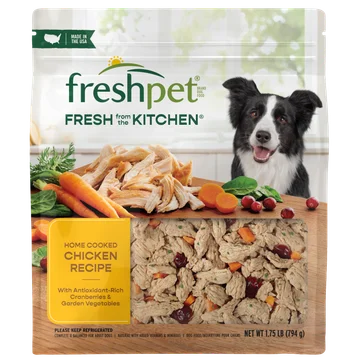
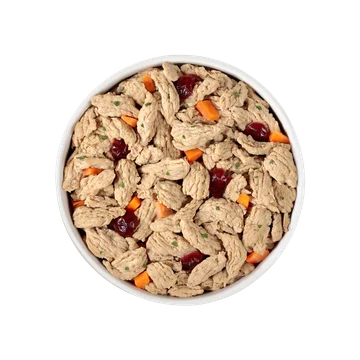
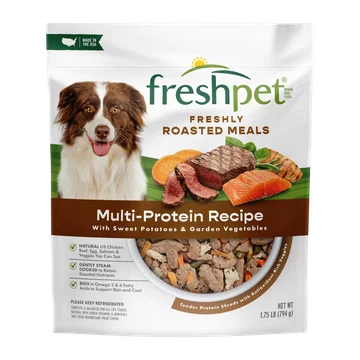
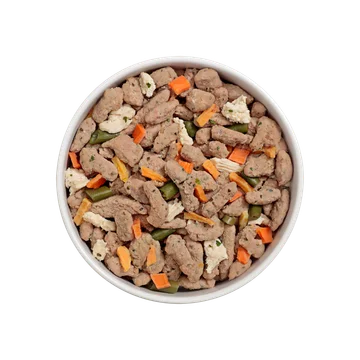
When compared with heavily processed diets, fresh and minimally cooked foods can offer distinct advantages from a nutritional science perspective. These benefits come from how the food is prepared and processed, which affects nutrient availability and digestibility.
- Higher digestibility – Minimally processed, whole-food ingredients tend to be easier for dogs to digest than heavily processed extruded kibble. Studies show improvements in the digestibility of key nutrients such as protein, fat, and dry matter in gently cooked diets. Because fresh foods are typically cooked at lower temperatures, shorter times, and lower pressures, they retain more of their natural nutritional value.
- Palatability – Fresh food often outperforms kibble in taste, smell, and texture. Without artificial flavors or sprayed-on fats, its appeal comes directly from the quality of the ingredients and the lighter cooking methods.
Bottom line: While all complete and balanced diets must meet AAFCO nutrient standards, fresh formulations stand out for their digestibility and palatability advantages. By focusing on gentler cooking methods and higher ingredient quality, science-based fresh foods give dogs a diet that more closely aligns with how nutrients are best delivered and used in the body.
What do vets say about Freshpet?
Veterinarians – especially board-certified nutritionists – play a central role in evaluating whether a pet food truly meets the standards of science-based nutrition. Freshpet has earned the trust of many in the veterinary community by aligning our approach with evidence, transparency, and global guidelines.
Veterinarians recognize Freshpet because our products are:
- Transparent – We are open about our ingredients, sourcing, and manufacturing process.
- Tested in feeding trials – Freshpet conducts research studies, including digestibility trials, and shares results publicly on our veterinary site to demonstrate the benefits of our food.
- Formulated by experts – Our recipes are developed by an in-house team of veterinary nutritionists and Ph.D. nutritionists with advanced training in companion animal nutrition.
- Follow AAFCO guidelines – We not only meet the minimum and maximum nutrient targets set by AAFCO, but we go beyond to provide additional nutrients to support specific needs of different life stages.
- Aligned with WSAVA’s guidelines – We meet the standards set forth by the World Small Animal Veterinary Association, ensuring best practices in pet food manufacturing and brand transparency.
By following these science-driven principles, Freshpet demonstrates the qualities that veterinarians look for when recommending diets to support dogs at every life stage.
Science isn’t a trend, it’s a responsibility
At Freshpet, we believe dog food should do more than fill a bowl. It should nourish, support longevity, and reflect the latest in nutritional science.
Our commitment to science-based nutrition is the foundation of how we formulate every recipe. Our in-house team of veterinary nutritionists and Ph.D. nutritionists uses current research to guide nutrient levels, ingredient choices, and quality controls.
We’re actively engaged in ongoing research initiatives to ensure our fresh meals deliver real-world benefits – from gut health to mobility support, and from puppy through senior life stages.
While some brands rely on buzzwords, we rely on evidence.
FAQs
Do vets recommend science-based dog food?
Yes. Reputable veterinarians and board-certified veterinary nutritionists recommend feeding science-based dog food. They know that a trusted formula should be grounded in peer-reviewed research, feeding trials, and rigorous quality control – not just marketing claims. They also look for brands that employ credentialed nutrition experts and demonstrate transparency in formulation and manufacturing. These are the hallmarks of a brand that puts a dog’s health first.
Is science-based dog food good for dogs?
Yes. Science-based dog food is designed to provide complete and balanced nutrition, formulated to support your dog’s well-being at every life stage. By focusing on optimal nutrient levels, digestibility, and ingredient quality, these foods help ensure your dog gets the most out of every meal – supporting a healthier, happier pup.