






written by Tori Holmes
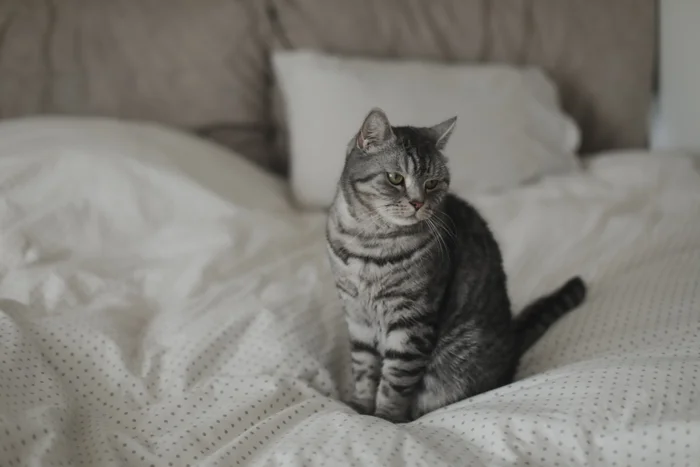
Does this scene sound familiar? You’re relaxing on the couch when your cat hops up, purring, and begins pushing its front paws into a soft blanket — one paw, then the other, in a slow, rhythmic pattern. This adorable behavior is known as “making biscuits” or kneading, and it’s immediately recognizable to all cat lovers.
But why exactly do cats make biscuits? Below, we cover the kittenhood instinct behind it, the scent-marking side of the behavior, what your cat’s claws tell you about their mood, and when kneading is worth a conversation with your vet.
The most widely accepted explanation for kneading traces back to the first weeks of a cat’s life. Kittens knead their mother’s belly while nursing to stimulate milk flow. The mammary glands release milk in response to this specific pressure, making the action an instinctive survival mechanism.
As cats age, the neural pathway for this behavior remains deeply embedded in the brain. So when a cat kneads a soft surface, they’re likely reliving the comforting emotions of their early experiences with their mother.
Yes, scent marking is part of the picture. One of the places cats have scent glands is on the soft pads of their paws. When your cat makes biscuits on their favorite bed, or even on your stomach, they are marking the spot with their pheromones. This acts as a territorial marker, indicating that the place or object is “theirs,” which can help increase feelings of security.
What’s really interesting is that when marking, cats will often switch between keeping their claws in or letting them out. The method they use depends on how they are feeling:
Understanding these small differences can help you better understand exactly how your cat is feeling in that moment.
Occasional kneading is a great indicator that your cat is feeling content. While it is a repetitive behavior, making biscuits is not a sign of anxiety or compulsion. It’s most frequently observed in cats that are relaxed and trusting of their human and their environment.
A cat does not make biscuits when it’s feeling:
Making biscuits can signal an issue if the kneading becomes destructive or incessant. Watch for kneading that tears fabric, leaves scratch marks on your skin, or happens constantly throughout the day, especially if your cat seems otherwise unsettled.
If you notice this, first rule out medical issues with a vet visit. If they have a clean bill of health, your vet can help you find ways to redirect the behavior or refer you to a behavioral expert for additional support.
The next time your cat starts making biscuits on you, you should be happy knowing that they’re mixing kittenhood instinct with scent-marking to claim you as their own safe space, because that’s a pretty high compliment!
When a cat kneads on you, they’re combining two things: the comforting instinct they learned nursing as a kitten, and scent marking from the glands in their paw pads. Kneading on your lap or stomach effectively claims you as part of their safe territory, which is a real compliment.
Kneading a soft surface before settling combines the kittenhood nursing instinct with scent marking, both of which help a cat feel secure in the spot they’re about to sleep in. It’s typically a sign your cat is relaxed and trusts their environment.
Claws out usually means your cat is feeling extra excited or has a stronger urge to scent-mark using the glands between their toes, while claws in signals pure relaxation. Both are normal, though it’s worth checking with your vet if the kneading tears fabric or leaves scratches on your skin.
Occasional kneading is a healthy sign of contentment, not anxiety or compulsion. But kneading that becomes destructive or happens constantly throughout the day, particularly alongside signs your cat seems unsettled, is worth a vet visit to rule out a medical cause first.









pet wellness
Learn how to safely introduce a dog and cat with step-by-step guidance for scent swapping, first meetings, and building a peaceful, lasting bond.
cat pet parents
Both cats and dogs are great companions, but if you're on "team dog", read on.