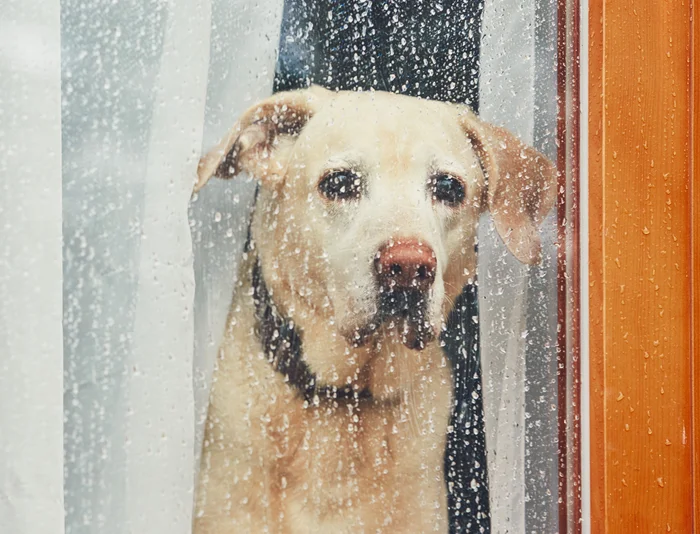
If you’ve ever watched your dog start pacing, whining, or hiding long before the first raindrop falls, you’ve witnessed something special. While we might only notice a storm when the sky darkens or thunder rumbles, our canine companions are picking up on environmental changes that signal trouble hours in advance.
How does a dog sense an incoming storm?
Most people assume dogs react to the sound of thunder itself, but many dogs begin showing anxiety well before any audible boom. This is because their keen senses can detect signals that we completely miss:
- Barometric pressure drops: Dogs can sense changes in atmospheric pressure through their nose and inner ear. Falling pressure indicates an approaching storm system and this pressure change can cause physical discomfort, making it hard to ignore.
- Static electricity buildup: As a storm approaches, electrical charges accumulate in the air and on surfaces. Your dog’s fur can actually hold static charge, creating unpleasant tingling sensations.
- Changes in smell and sound: A dog’s sense of smell is up to 100,000 times more acute than ours, and their hearing is two to three times better as well. They can detect the distinctive smell that lightning creates and can pick up low-frequency rumbles of thunder that haven't reached human ears yet.
- Subtle light changes: Dogs have more rods, specialized light-sensitive cells, in their eyes. This makes them better at detecting changes in light levels so they can easily notice the subtle dimming of the sky as storm clouds gather on the horizon.
As you can see, your dog isn't reacting to the storm itself – they're reading an entire weather forecast through their senses.
Why some dogs react before the storm arrives
A dog’s strong senses allow them to know that a storm is coming well ahead of its arrival, but the intensity of their reaction depends on several factors:
- Past experiences: Dogs who’ve had negative experiences with storms may develop a stronger response ahead of or during a storm.
- Breed predisposition: Breed also plays a role in how they respond to storms. For instance, herding breeds often show heightened sensitivity to environmental changes, whereas terriers and some toy breeds tend to display more storm anxiety.
- Individual sensitivity: Just like people, some dogs are naturally more sensitive to environmental stimuli. For example, senior dogs may feel pressure changes more intensely due to aging joints.
While their senses play an important role, your dog’s history and breed also determine just how strongly they'll react to the approaching storm.
Calming strategies that actually work
When you notice your dog showing early signs of storm anxiety, these practical strategies can make a world of difference:
- Create a safe space: Choose an interior room in your house, such as a basement or bathroom, to set up a safe space for your pup. In it, put cozy bedding, their favorite toys, and a spot for them to eat their favorite Freshpet recipes so they feel comfortable being there during a storm.
- Try calming products: A ThunderShirt applies gentle, constant pressure to ease anxiety during storms or fireworks.
- Manage their environment: In addition to creating a safe space, try to manage the overall environment of your house. Close curtains to block lightning flashes, provide a non-carpet floor to ground static electricity, and consider playing white noise or calming music to further mask the noise, if necessary. Most importantly, do your best to stay calm yourself, as dogs take emotional cues from you. If you’re calm, you signal to them that everything is fine.
While mild storm anxiety can be easily managed yourself, there are times when professional help is warranted. If your dog injures themselves, causes damage to your house, or displays signs of extreme distress due to their storm anxiety, then it’s time to call in the experts.
Your vet will be able to prescribe anti-anxiety medicine for severe cases of storm anxiety, and they can also refer you to a canine behaviorist. Canine behaviorists will create customized behavior modification plans that help to desensitize your dog to storms over time.
Understanding your pup’s senses and how they impact their response to storms allows you to respond appropriately. This is especially important if storms cause your dog anxiety, as you can transform a potentially scary experience into a manageable one for your four-legged friend.