

written by Dr. Gerardo Perez-Camargo, DVM, Ph.D.
Dog food recalls are issued by manufacturers, the FDA, or state regulators, usually because of contamination (such as Salmonella or Listeria), foreign material, or a nutritional imbalance. You can check whether a food has been affected through the FDA’s official recall listings or trusted veterinary sources.
Below, we’ll explain how recalls work, where to check, what to do if your food is affected, and how to judge whether a brand is safe.
A dog food recall is the process of removing a product from the market when there’s a concern it could be unsafe or isn’t what its label claims. Most recalls are voluntary and issued by the manufacturer itself, though the FDA can request one or, in some cases, order it. They exist to protect pets, and the system is designed to move quickly.
Most recalls trace back to a handful of causes:
When a recall is announced, a public notice tells owners to stop feeding the affected product and explains how to identify it—usually by brand, product name, and specific lot numbers or date codes. Owners are typically directed to return the product for a refund or dispose of it safely.
To check whether your dog’s food has been recalled, compare the brand name, UPC (barcode), and lot number on your packaging against official recall listings. Recalls usually affect only specific lot numbers and date codes and not an entire product line, which is exactly why the lot number matters so much.
Have these three details ready:
Then check these official sources:
The most authoritative places to check are the FDA’s Recalls & Withdrawals listings for animal and veterinary products (the official federal record), the FDA’s Outbreaks & Advisories page (which tracks active safety investigations and alerts), and your veterinarian or the American Veterinary Medical Association (AVMA), which maintains its own recall and safety-alert listings.
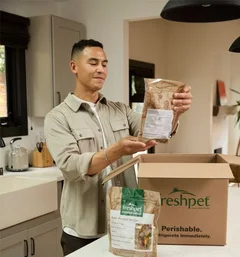
One simple habit makes all of this easier: When you buy a new bag or package, photograph the lot number and UPC with your phone. That way you can verify a recall later even if you’ve already discarded the original packaging.
If your dog’s food is recalled, stop feeding it immediately and secure it where no other animal can reach it. From there, a clear order of operations helps:
Most dogs are fine if the food is stopped promptly, but don’t hesitate to call your vet if you have concerns. And if your pet became ill, report it to the FDA through its Safety Reporting Portal. These reports help the FDA identify patterns and protect other pets.
You can judge a dog food brand’s safety by looking for a few concrete signals: an AAFCO nutritional adequacy statement on the packaging, transparent and clearly named ingredients, evidence of quality and contaminant testing, and established safety and recall-handling protocols.
You can apply these checks to any brand on the shelf, which is what makes them useful.
An AAFCO nutritional adequacy statement is a line on the packaging confirming that a food is complete and balanced for a specific life stage, such as puppy (growth), adult (maintenance), or all life stages. Its presence is a baseline signal that the food meets established nutritional standards for that stage. It’s one of the simplest things to look for and one of the most informative.
Recalls can feel alarming, but they’re a sign the safety net is working. Most are voluntary, checking is simple, and knowing what to look for in a brand puts you in control. Keep the official sources bookmarked, photograph your lot numbers when you buy, and you’ll be well equipped to act quickly if you ever need to.
To see how our brand approaches food safety and recall transparency, read Our Commitment to You.
Check the FDA’s Recalls & Withdrawals and Outbreaks & Advisories pages, and confirm with your veterinarian or the AVMA’s recall listings. Compare your food’s brand, UPC, and lot number against the official notice, since recalls usually affect only specific lots rather than an entire product line.
Most recalls are due to bacterial contamination (such as Salmonella or Listeria), foreign material, or nutritional imbalances. They’re usually issued voluntarily by the manufacturer, though the FDA can request or order one when needed.
Many dogs show no ill effects, especially if feeding stops promptly. Still, watch for vomiting, diarrhea, lethargy, or loss of appetite, and contact your veterinarian if any of these appear. If your dog seems unwell in any way, a call to your vet is always worthwhile.
cat pet parents
Join us as we cover the fascinating reasons why cats get the "nighttime zoomies."
pet wellness
Living in an apartment with a dog? Explore simple ways to exercise your dog, keep them entertained indoors, and help them thrive in small spaces.