







written by Tori Holmes
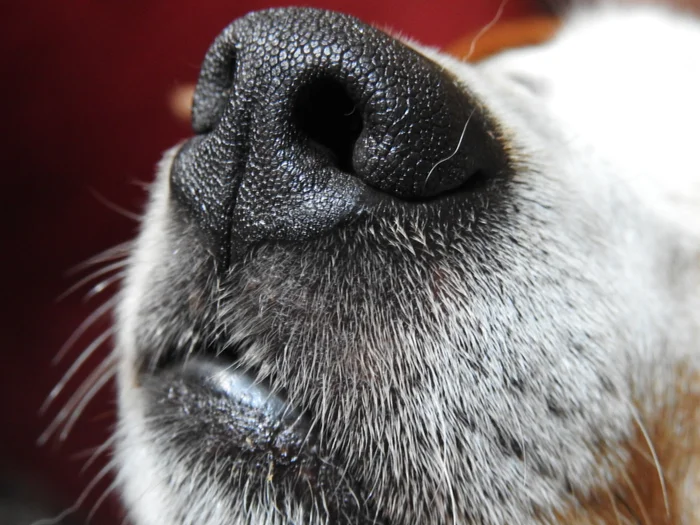
While whiskers might seem like just another adorable feature of your pet, in reality they are an extraordinary sensory tool. But what do whiskers actually do and how do they help your pet navigate their world?
Your pet’s whiskers are designed to detect the invisible. As they are rooted much deeper in the skin than normal fur and are packed with sensitive nerves, it makes them incredibly responsive to the tiniest vibrations.
Even a slight disturbance in the air, like a nearby object moving, will cause a whisker to vibrate. These vibrations are instantly transmitted to the brain, providing information about the size, shape, and speed of nearby objects without the animal even needing to see them.
This is particularly useful when your pet is ‘hunting’ their favorite toy. Their whiskers allow them to pinpoint it, especially when it's close to their face and out of their direct line of sight.
These specialized hairs also function as a navigation system. In fact, whiskers are so finely tuned that they act like a built-in GPS, helping your pet "see" the world through touch – especially when their eyesight falls short.
As you can see, those seemingly simple whiskers are actually high-tech sensors, helping them measure, navigate, and protect themselves.
Whiskers aren't just for sensing the physical world – our pets also use them as a communication tool. If you look closely, the position of your pet's whiskers can give you a clue about how they're feeling.
There are plenty of similarities in how our cats and dogs use their whiskers to express their feelings and navigate the world, but there are also some fascinating differences worth exploring.
As you’ve seen, both dogs and cats have whiskers that work on the same basic principles:
Given all these vital functions, trimming a pet's whiskers is a major no-no. While it doesn't physically hurt, it eliminates a vital sensory input and can leave your pet feeling disoriented. The good news is that if a whisker is accidentally trimmed or falls out naturally, it will grow back – but until then, your pet might be a bit more hesitant and clumsy.
These incredible, multi-functional hairs are a testament to how perfectly adapted our pets are to their environments. They are a key part of how they explore, play, communicate, and navigate the world!

pet wellness
Wondering if your dog really feels guilty when they misbehave? Learn what that guilty look really means and how to respond in a calm, helpful way.
fun with pets
Service animals do more than guide. Discover how dogs and cats detect seizures, support mobility, find the lost, and help their humans every day.