




written by Tori Holmes
For most dogs, their “job” involves being a loving companion and maybe learning a few tricks. But for a special group of canines, having a job is a reality that requires incredible skill, dedication, and a surprisingly human-like need for work-life balance.
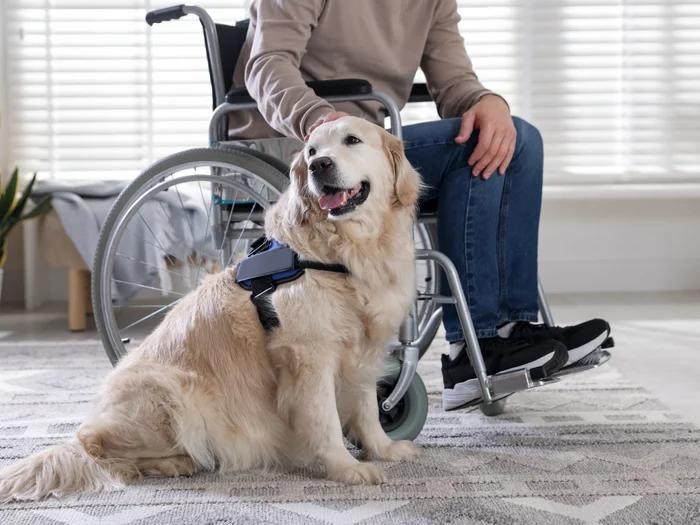
We often see these dogs in action: leading a person through a crowd, sniffing in an airport or train station, or standing stoically beside their handler. What we don’t see is the behind-the-scenes life of these amazing animals. How do they switch from high-stakes work to being a normal dog at home? Let's pull back the curtain on the life of a dog with a job.
A working dog’s day is structured and incredibly demanding. Here’s what you can expect from the average workday of a dog with a job:
As you can see, a working dog’s day is very structured. But what happens when the line between "on" and "off" becomes blurred? That's where the concept of work-life balance becomes just as critical for our four-legged professionals as it is for us.
Achieving work-life balance is essential to prevent burnout and maintain a working dog’s mental health. Just like humans can become stressed without adequate breaks, a working dog needs time to simply be a dog. So, how does a dog that spends its day working decompress?
In the end, even the most driven professional deserves a chance to rest, recharge, and remember what it feels like to simply be a dog.
By now you might be questioning why a dog would be happy having their life revolve around a job. The motivation behind all that effort, however, is refreshingly simple: for these dogs, work isn't a chore – it's their favorite game.
Canines that thrive as working dogs are motivated by their natural instincts to hunt, to herd or to protect, and their work gives these instincts a meaningful outlet. The structure, positive reinforcement, and close partnership with their handler provide a rich and fulfilling life that many pet dogs don’t get to experience.
In the end, the life of a working dog is a fun little paradox. They are driven professionals who take immense pride in their job, yet when the workday ends, they're no different from the dog curled up on your living room floor. Their ability to find that perfect balance between duty and play is not just a testament to their training, but to their incredible bond with their human partners.
cat pet parents
Join us as we cover the fascinating reasons why cats get the "nighttime zoomies."
pet wellness
Living in an apartment with a dog? Explore simple ways to exercise your dog, keep them entertained indoors, and help them thrive in small spaces.