





written by Dr. Gerardo Perez-Camargo, DVM, Ph.D.
Choosing between fresh, kibble, and raw dog food isn’t just a preference. Each option can meet Association of American Feed Control Officials (AAFCO) standards when properly formulated, but they differ significantly in how they’re processed, how safe they are to handle, the quality of ingredients used, and how they fit into everyday life.
Those differences show up in real ways, from digestion and nutrient absorption to long-term health outcomes, food safety risks, and overall lifestyle fit.
This guide breaks down each food type, compares them across key factors, and gives you a practical framework for choosing what actually works best for your dog.
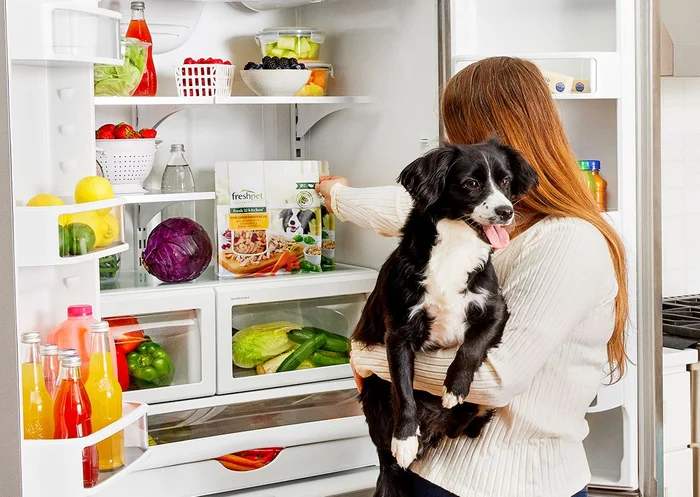
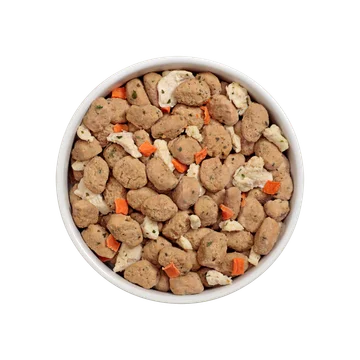
Fresh dog food is cooked for ideal nutrient absorption; made from whole, recognizable ingredients; and preserved through refrigeration rather than artificial additives. It is cooked at controlled temperatures to eliminate harmful foodborne pathogens while maintaining nutrient integrity.
Fresh recipes typically include real meat, vegetables, and grains, and are steam-cooked at lower temperatures than kibble. This helps preserve heat-sensitive nutrients like certain vitamins and amino acids and can support stronger nutrient retention and bioavailability than high-heat processed foods. Any legitimate, responsible fresh pet food should be formulated by veterinary nutritionists and meet AAFCO standards for complete and balanced nutrition.
A key distinction to note is that fresh food is not raw. It is fully cooked, making it safer from a foodborne illness standpoint while still offering high ingredient transparency.
What it is: Fully cooked dog food that’s ideally processed for proper digestion. It’s made from whole, recognizable ingredients and stored refrigerated.
How it’s made: Cooked for ideal nutrient absorption (often steam-cooked) at lower temperatures, then packaged and kept cold instead of using preservatives. Sometimes this cooking process is described as “gently cooked.” What that actually means is that the food is pasteurized. Pasteurization is a heating process that kills harmful bacteria, but at lower times and temperatures than sterilization.
Key characteristics: High ingredient transparency, no artificial preservatives, AAFCO-complete when formulated properly, and higher nutrient retention than high-heat processed foods.
Key takeaway: Fresh dog food is cooked for ideal nutrient absorption and made with whole ingredients, offering a balance between safety and nutritional quality.
Kibble is dry dog food produced through a high-heat extrusion process that creates shelf-stable pellets. It is the most widely used type of dog food in the United States due to its affordability, convenience, and long shelf life.
The extrusion process involves grinding ingredients, mixing them into a dough, and cooking them at high temperatures and pressure before forming them into kibble pieces. After extrusion, the kibble is heated further for a long time to reduce moisture content and help prevent bacterial growth, allowing the food to remain shelf-stable for extended periods.
Most kibble products are formulated to meet AAFCO standards, ensuring they are nutritionally complete. However, high-heat processing can reduce the bioavailability of some nutrients through thermal degradation.
What it is: Dry, shelf-stable dog food made from processed ingredients formed into pellets.
How it’s made: Ingredients are ground, mixed, and cooked under high heat and pressure using extrusion, then dried. As a result, the individual ingredients used in the product are not recognizable by plain sight.
Key characteristics: Long shelf life, convenient storage, widely available, AAFCO-compliant, and often supplemented with synthetic nutrients.
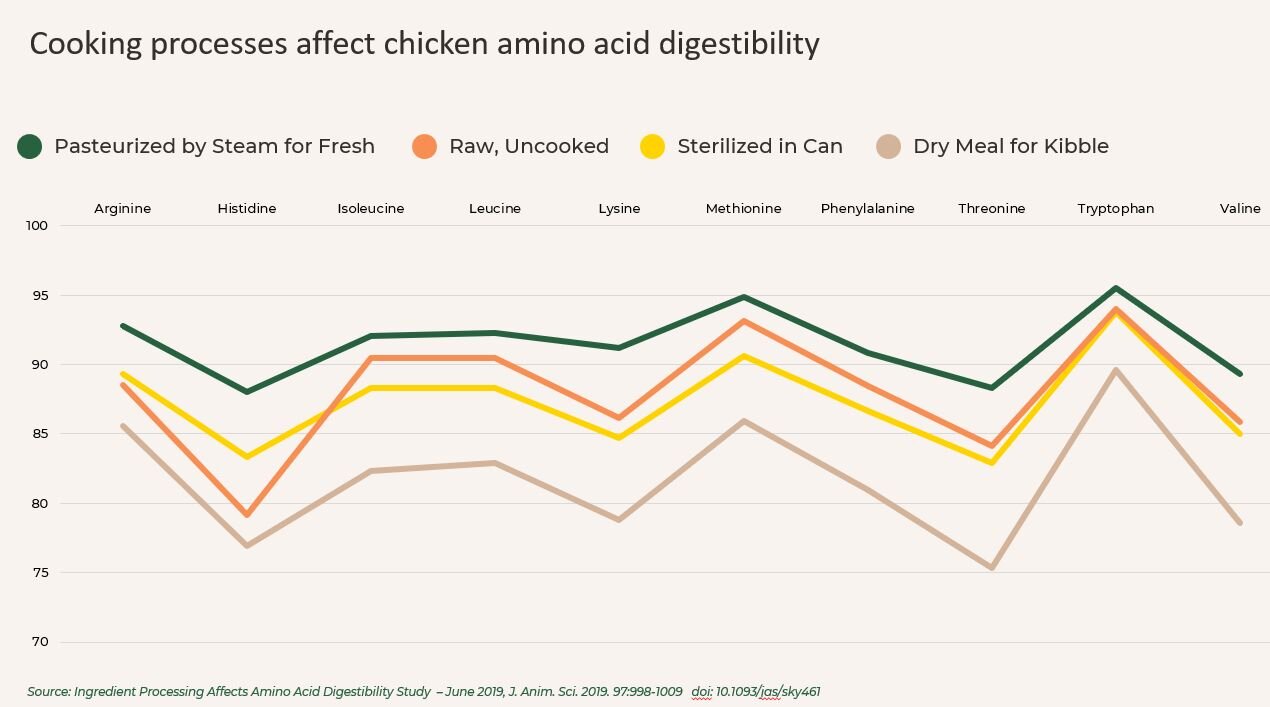
In a nutritional study performed by a leading U.S. research university, it was demonstrated that the availability of essential nutrients like amino acids is affected by the pet food processes. Dry kibble had the lowest availability whereas fresh pet foods had the highest.
Sometimes people think that because excessive cooking makes nutrients less available, the other extreme (raw) would be the most digestible. However, another thing that the study demonstrated was that nutrients in raw pet food were not as available as in fresh diets. Some gentle cooking gave better nutrient availability results than dry diets and raw diets.
The ideal spot for digestibility was proven to be somewhere in the middle between over-cooking and no cooking at all (raw). This is because gentle steaming of the ingredients helps to initiate the fragmentation of collagen and carbohydrates, so then the digestion process inside the body can be more effective. In biology, the optimal point is often in the middle, rather than the extremes. So moderate cooking is preferable to no cooking or excess cooking.
Key takeaway: Kibble is convenient and nutritionally complete, but its high-heat processing can affect nutrient bioavailability.
Raw dog food consists of uncooked meat, bones, and organs, often combined with fruits and vegetables. It can be commercially prepared through frozen, freeze-dried, or dehydrated formats or assembled at home.
However, veterinary organizations including the American Veterinary Medical Association (AVMA), the World Small Animal Veterinary Association (WSAVA), the Food and Drug Administration (FDA), and the U.S. Centers for Disease Control and Prevention (CDC) have documented concerns associated with raw feeding, particularly bacterial contamination risks involving pathogens such as Salmonella and E. coli, cross-contamination in the home, zoonotic exposure to humans, and nutritional imbalance in home-prepared diets. Commercial raw diets are generally safer than homemade versions, but uncooked diets still carry inherent food safety risks.
What it is: Uncooked dog food made from raw meat, bones, organs, and sometimes fruits and vegetables.
How it’s made: Either commercially prepared under controlled conditions or assembled at home without cooking.
Key characteristics: No heat processing, high perceived bioavailability, increased risk of bacterial contamination, and variable nutritional completeness.
Key takeaway: Raw dog food is unprocessed and uncooked, but it carries documented safety and nutritional risks, especially when not professionally formulated.
Fresh, kibble, and raw dog food differ most significantly in ingredient quality, processing, digestibility, cost per day, convenience, and storage. Each category below compares all three options using evidence-based criteria.
| Comparison Factor | Fresh | Kibble | Raw |
|---|---|---|---|
| Ingredient quality | Whole, recognizable ingredients | Varies by brand | Whole, raw ingredients |
| Processing | Ideally processed for digestibility | Highly processed (extrusion) | High-pressure processing (HPP) |
| Digestibility | High | Low | Moderate |
| Cost per day | $2–$4 (medium dog) | $0.50–$4 depending on quality | $5–$15+ |
| Convenience | Moderate – requires refrigeration | Excellent – shelf stable | Low – requires freezer and handling |
| Storage | Refrigerator, 7 days once opened | Pantry, months | Freezer until serving |
Fresh dog food serves as a practical middle ground between kibble and raw, offering the ingredient transparency and lighter processing people want without the higher safety risks associated with uncooked diets. For most dogs, it is the strongest option across the factors that matter most.
Safety is one of the biggest differences between fresh, kibble, and raw feeding approaches.
Organizations including the AVMA, WSAVA, FDA, and CDC have all published guidance outlining the food safety concerns associated with raw feeding, particularly in households with children, older adults, or immunocompromised individuals.
Kibble is widely viewed as the most affordable dog food option, but the comparison changes when you look at actual daily feeding costs instead of the price of the bag.
| Food Type | Approximate Daily Cost |
|---|---|
| Basic kibble | $0.50–$1.50 |
| Premium kibble | $2–$4 |
| Fresh dog food | $2–$4 |
| Raw dog food | $5–$15+ |
Fresh dog food is not the cheapest option, but it is often far more comparable to premium kibble on a daily feeding basis than many pet parents expect. Compared to raw feeding, fresh food is typically much more affordable while still offering whole ingredients and lighter processing.
Choosing the right food isn’t about picking the “best” option in general. It’s about choosing what fits your dog’s needs and your day-to-day reality. Once you understand what actually matters, the right choice tends to become pretty clear.
Start by looking at your dog and your routine. These factors shape what will work long term:
Once you’ve thought through those factors, the decision usually comes down to what you value most:
Choosing what your dog eats every day is one of the most consistent ways you care for them. Small, informed decisions here can have a lasting impact on their health and quality of life.
The takeaway: For most healthy adult dogs, fresh dog food is the healthiest overall option because it offers high ingredient quality, less processing than kibble, and fewer safety risks than raw diets.
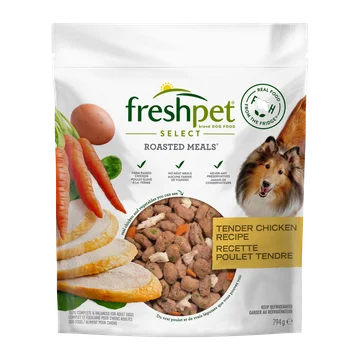
If fresh dog food is the right choice for your dog, Freshpet offers a practical way to choose it without giving up convenience, safety, or nutritional quality. It delivers on the factors that make fresh food worth choosing.
Unlike premium subscription-only raw or fresh food brands, Freshpet is also available in stores with no subscription required and no delivery window to plan around. For most households, the per-day cost is comparable to premium kibble.
Real food does not have to mean complicated.
What you put in your dog’s bowl every day is one of the most consistent acts of care you make for them. Freshpet makes it possible to choose food made from real ingredients, minimally processed, without compromise.
Nutritionally, fresh dog food and premium kibble can both meet Association of American Feed Control Officials standards, but fresh food typically offers less processing, stronger ingredient transparency, and better retention of some heat-sensitive nutrients.
Compared to premium kibble, the difference is smaller, but fresh food still offers a more natural ingredient profile and processing approach, making it the stronger overall option for most healthy adult dogs.
Veterinarians often do not recommend raw diets due to risks of bacterial contamination, nutritional imbalance, cross-contamination, zoonotic exposure, and bone-related injuries. These concerns are supported by AVMA and WSAVA guidance, along with FDA, CDC, and peer-reviewed research.
For pet owners looking for less processed food without these safety risks, fully cooked fresh dog food provides a safer alternative while still offering high ingredient quality and nutrient integrity.
Mixing fresh food with kibble is generally safe and commonly used, and many pet owners use it as a way to improve ingredient quality without fully transitioning.
Mixing raw with kibble is more complex due to food safety considerations, potential cross-contamination, and possible differences in digestion rates, though evidence is limited.
When combining feeding approaches, fresh food is typically the most flexible and lower-risk option.
Fresh dog food typically costs about $2–$4 per day for a medium dog, making it comparable to premium kibble on a daily feeding cost basis and significantly less expensive than raw diets, which can exceed $5–$15 per day.
While basic kibble remains the lowest-cost option, fresh food offers a higher level of ingredient quality and less processing at a price point that is often closer to premium kibble than many pet owners expect.
The best dog food for puppies is one formulated to meet AAFCO puppy growth or all life stages standards. Both fresh food and premium kibble can meet these requirements when properly formulated.
However, fresh dog food can offer advantages in ingredient quality and digestibility during early development. Raw diets are generally not recommended for puppies due to higher safety risk, as they still have a developing immune system.

cat pet parents
Join us as we cover the fascinating reasons why cats get the "nighttime zoomies."

pet wellness
Living in an apartment with a dog? Explore simple ways to exercise your dog, keep them entertained indoors, and help them thrive in small spaces.