







written by Tori Holmes
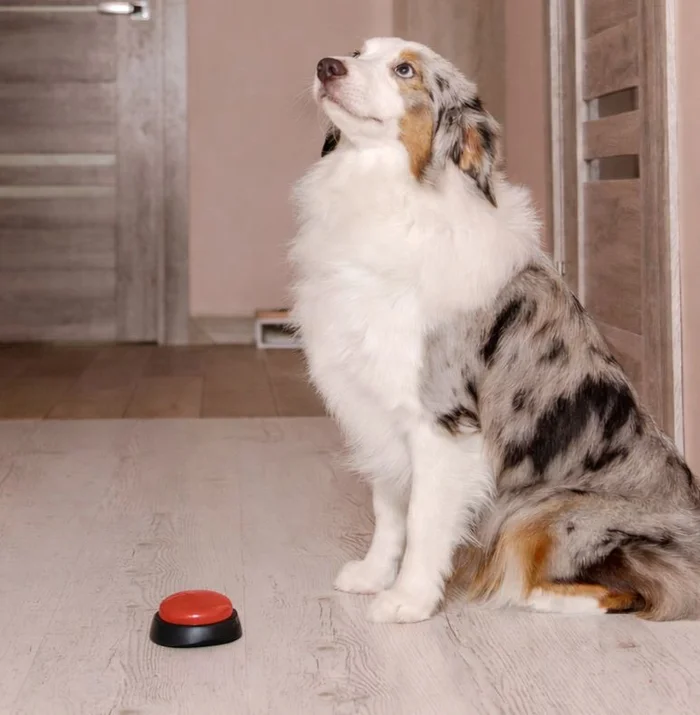
If you're on social media, you've likely seen videos of dogs pressing buttons that allow them to ask for things like "outside", "play", or "treats". While these videos are cute, they also address a strong desire we, as pet parents, have to understand what our four-legged friends are thinking. But can dogs truly learn to talk with the help of technology?
To answer the question "can dogs talk with the help of technology," we first need to define what we mean by "talk." Dogs cannot learn human language in the same way we do, with complex grammar and fully formed sentences. What they can learn, however, is to associate specific words with desired outcomes.
Dogs learn that pressing a specific button produces a specific sound, which in turn leads to a specific outcome. Just like teaching a toddler, pet parents can consistently model the behavior by saying the word and pressing the button themselves before performing the action. Over time, dogs learn to associate the words with their accompanying action.
What's great about this is that it isn't just a trick. By pressing the button, your dog is intentionally initiating communication with you. They have learned that these buttons give them a degree of control over their environment, allowing them to ask for things that they want.
Many pet parents have anecdotal stories about the success they've had with these buttons, but proper research into the topic has been limited – until now.
A major study led by UC San Diego cognitive scientist Federico Rossano looked at how dogs use buttons to communicate. The study took place in a dog's own home, both with their owners and with complete strangers, to eliminate any possible cue-giving from their owners. In the end, the results were nothing short of amazing:
These results show that the dogs were processing the meaning of the word itself, not just reacting to their owner's body language. While this doesn't mean that our dogs understand language as we do, it proves they can form strong mental associations between the sound of a word and a specific concept or outcome.
If you're curious about what your dog has to say, it's definitely worth giving these buttons a try. FluentPet offers a wide range of button systems for both cats and dogs. What makes their buttons special is the ability to organize them into categories to help pets learn vocabulary logically, similar to how humans learn. You can also add more buttons to your FluentPet setup as your pet's vocabulary grows.
While they won't lead to hours of chatter, these buttons open a powerful new line of communication. And when you and your dog understand each other better, your bond naturally grows stronger.

pet wellness
Adopting a senior dog or cat means a known personality, less training, and endless love. Learn why senior pets make wonderful companions for any home.

fun with pets
From color vision to tail wags to swimming ability, we debunk five common dog myths. Read on to better understand your dog's real needs and behavior.